
Abstract
Oyster reefs are critical ecosystem species that sustain biodiversity, filter water, and protect coastlines, yet 85% have been lost globally. Restoring these ecosystems requires regular underwater monitoring to assess reef health, a task that remains costly, hazardous, and limited when performed by human divers. Autonomous underwater vehicles (AUVs) offer a promising alternative, but existing AUVs rely on geometry-based navigation that cannot interpret scene semantics. Recent vision-language models (VLMs) enable semantic reasoning for intelligent exploration, but existing VLM-driven systems adopt an end-to-end paradigm, introducing three key limitations: frequent inference delays, weak dynamics awareness, and limited self-correction.
We propose CORAL, a framework that decouples high-level semantic reasoning from low-level reactive control. The VLM provides high-level exploration guidance by selecting waypoints, while a dynamics-based planner handles low-level collision-free execution. A geometric verification module validates waypoints and triggers replanning when needed. Compared with the previous state-of-the-art, CORAL improves coverage by 14.28 percentage points, reduces collisions by 100%, and requires 57% fewer VLM calls.
Method
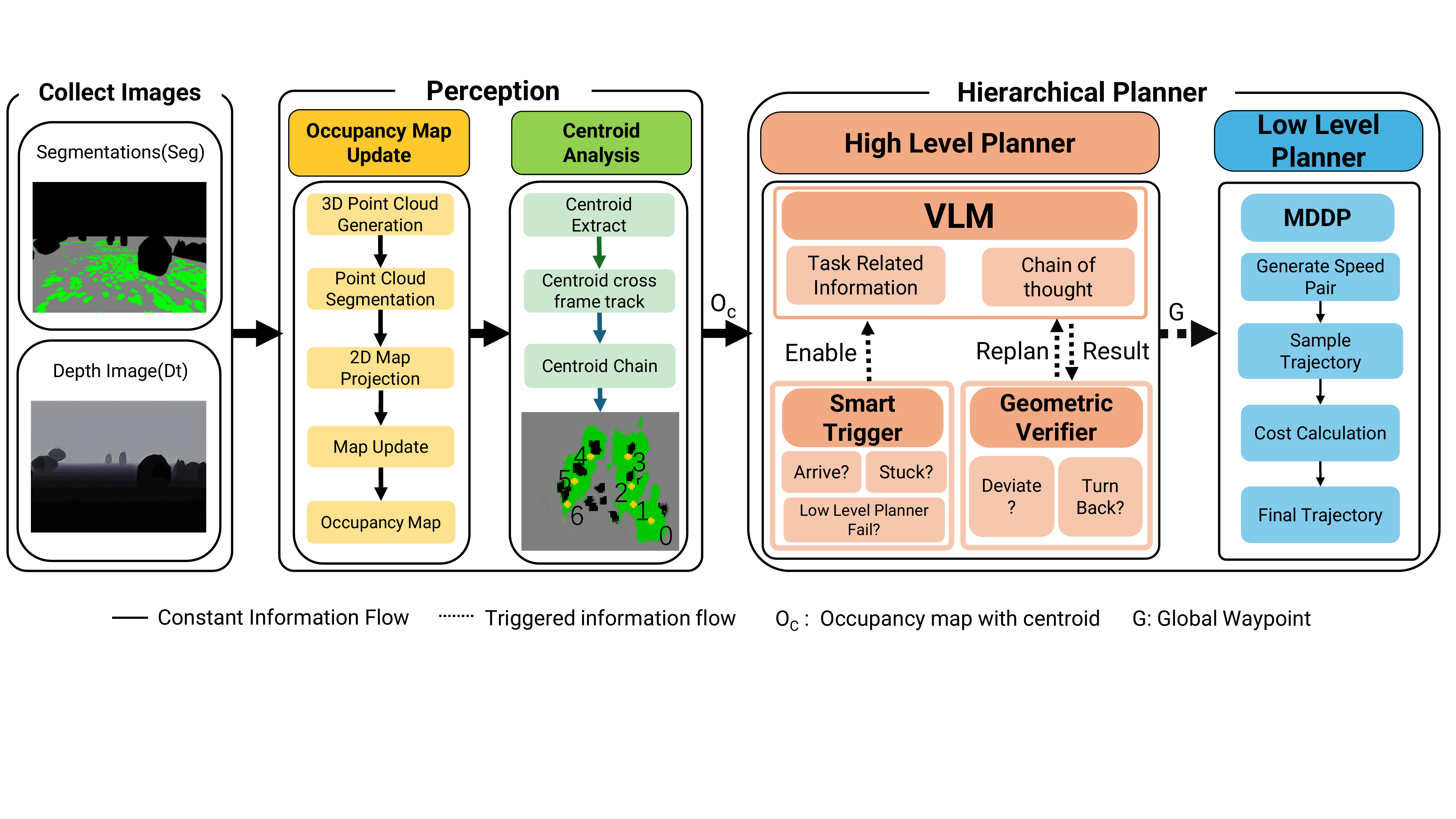
CORAL separates the navigation stack into three tightly integrated layers: a persistent occupancy map with centroid chain extraction, a VLM high-level planner invoked only at meaningful decision points, and a dynamics-aware MDDP low-level controller running continuously at 10 Hz.
- Perception & Centroid Chain — Depth and segmentation images are fused into a persistent 2D occupancy map. Cluster centroids are extracted and organized into an ordered chain with cross-frame exponential smoothing.
- VLM High-Level Planner — A smart trigger invokes the VLM only on goal arrival, stuck detection, or planner failure. A geometric verifier rejects backward or off-trend waypoints with structured corrective feedback.
- MDDP Low-Level Controller — Decremental Dynamics Planning augments MPPI with variable-fidelity dynamics — dense near the robot, progressively simplified farther along — enabling long-horizon planning at zero collisions.
Simulation
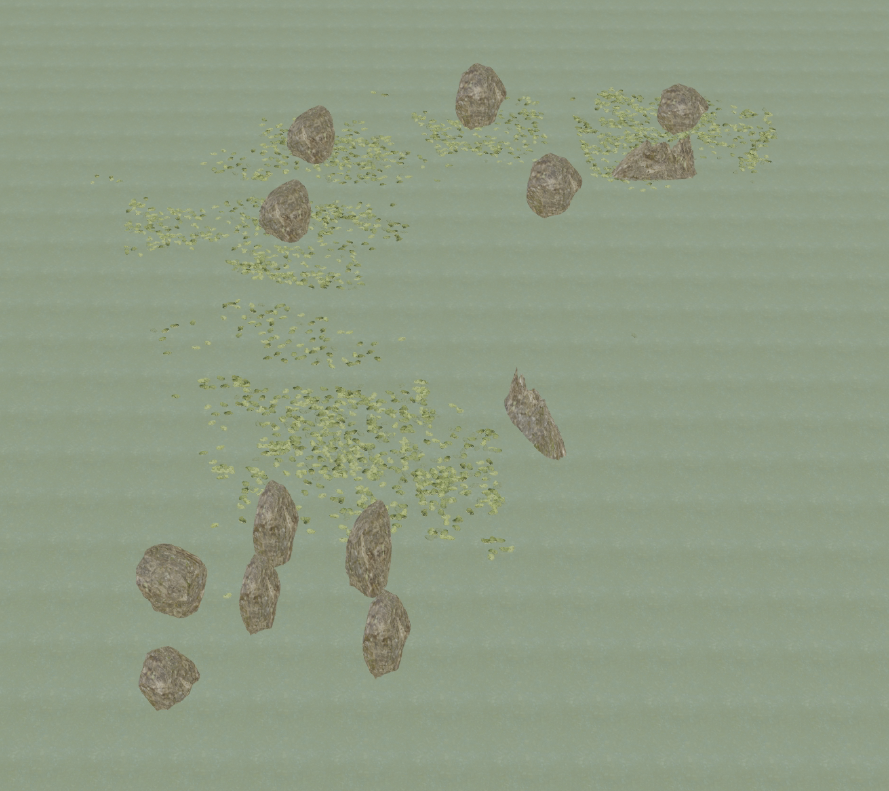
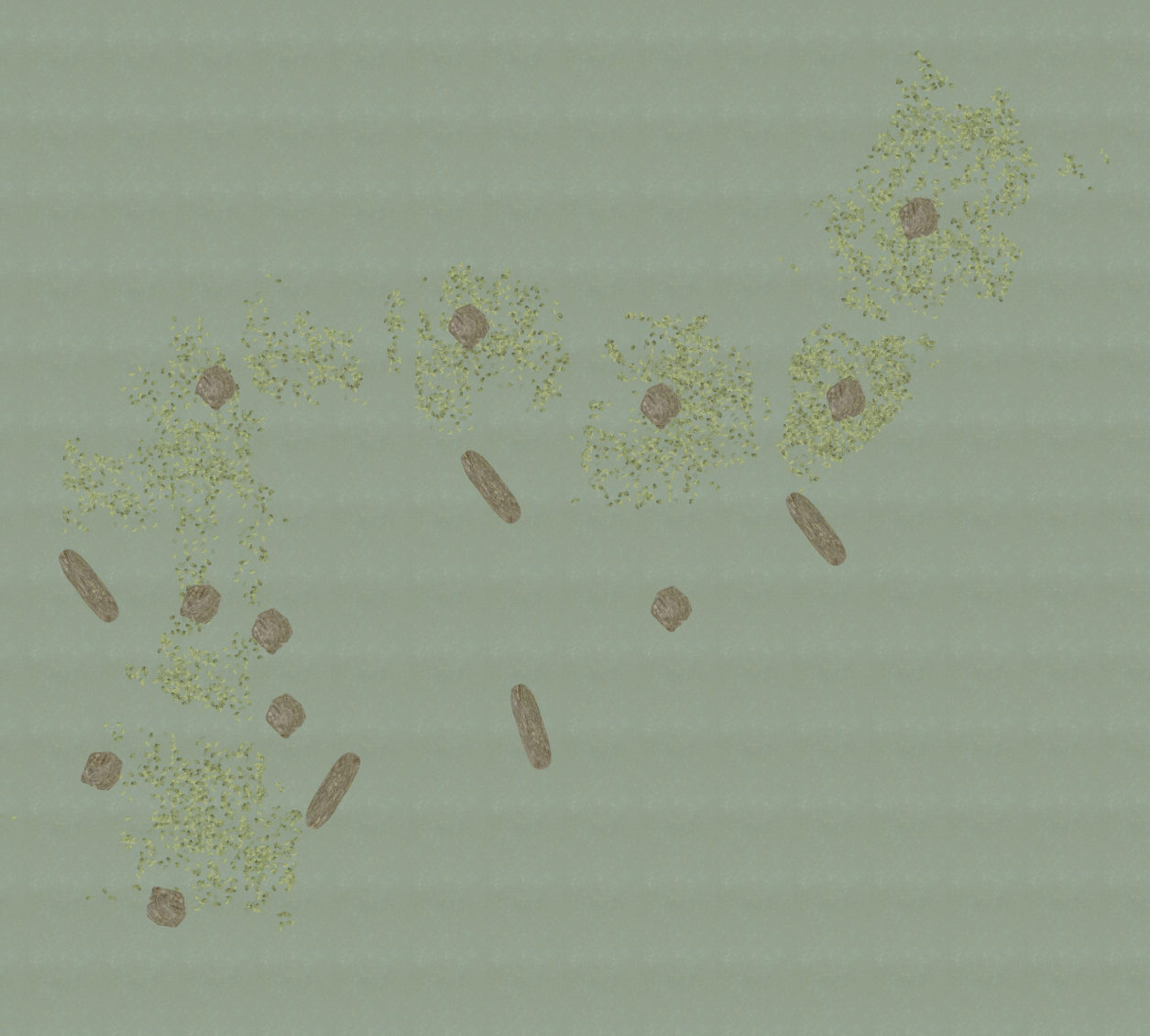
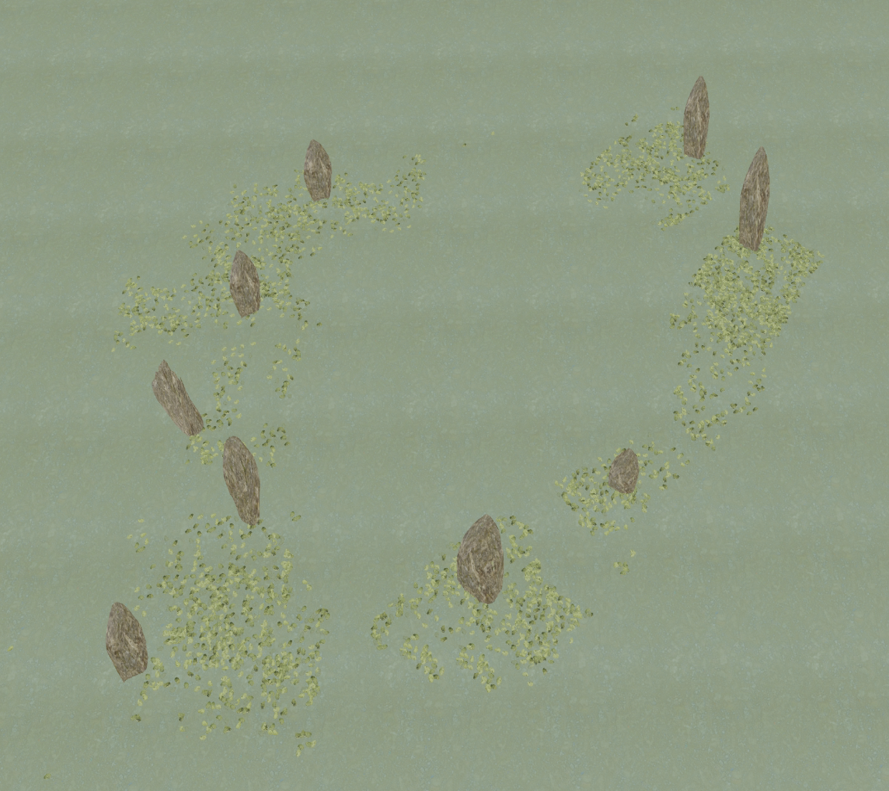
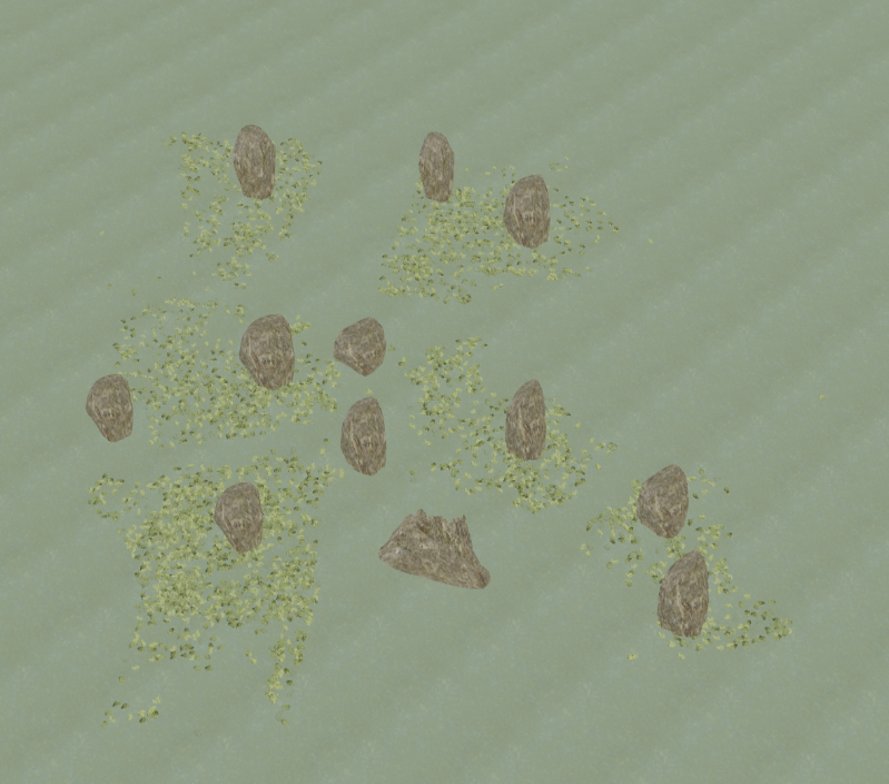
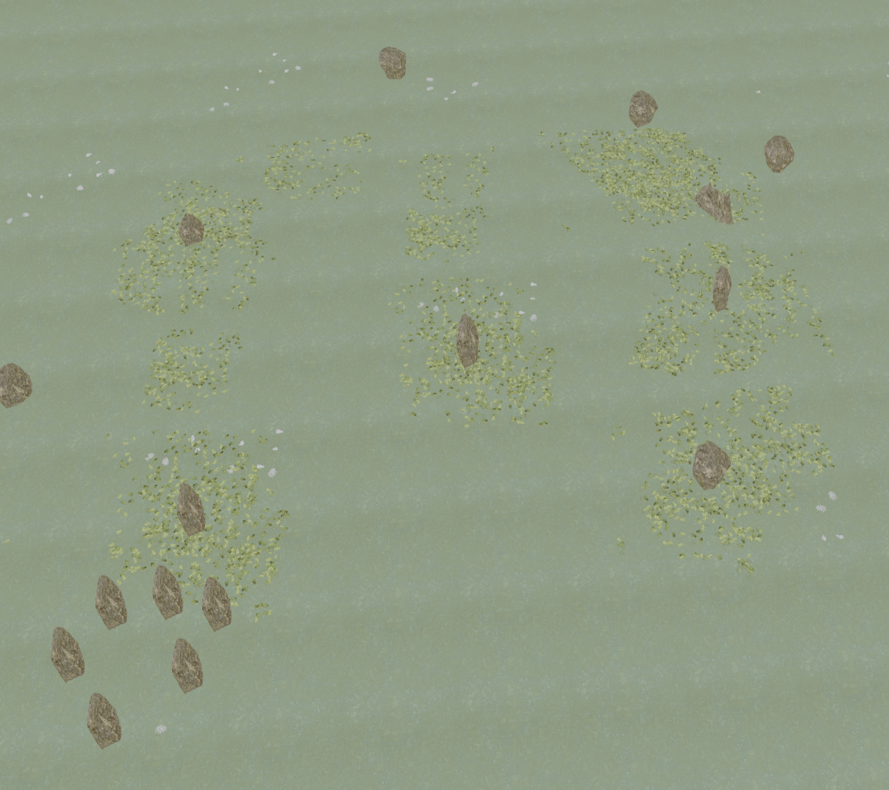
We evaluate CORAL across five reef-topology environments of increasing complexity. Each environment is shown below with its coverage result and a playback of the full mission.
Simulation videos
- L-Shape — https://www.youtube.com/watch?v=f_jGZbtpLJ8
- S-Shape — https://www.youtube.com/watch?v=-eZtqSa4JVw
- O-Shape — https://www.youtube.com/watch?v=QMioBT-mZ8w
- K-Shape — https://www.youtube.com/watch?v=gmfq7FswaL4
- E-Shape — https://www.youtube.com/watch?v=F-hgrJ9SHFg
Trajectories
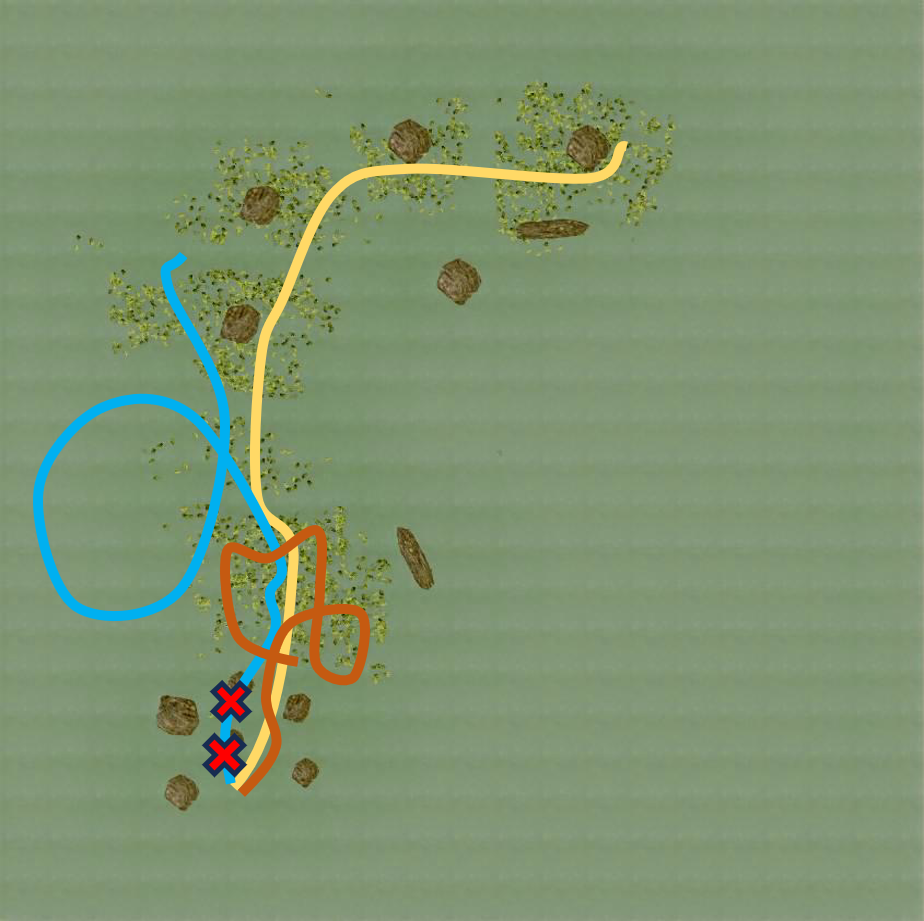
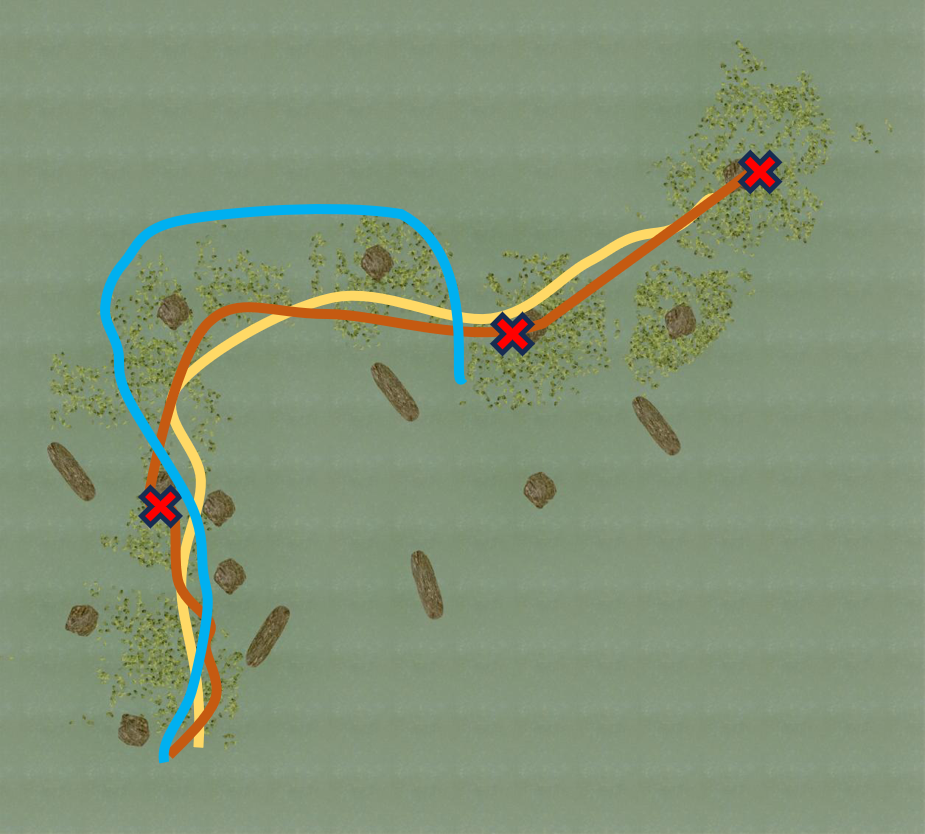
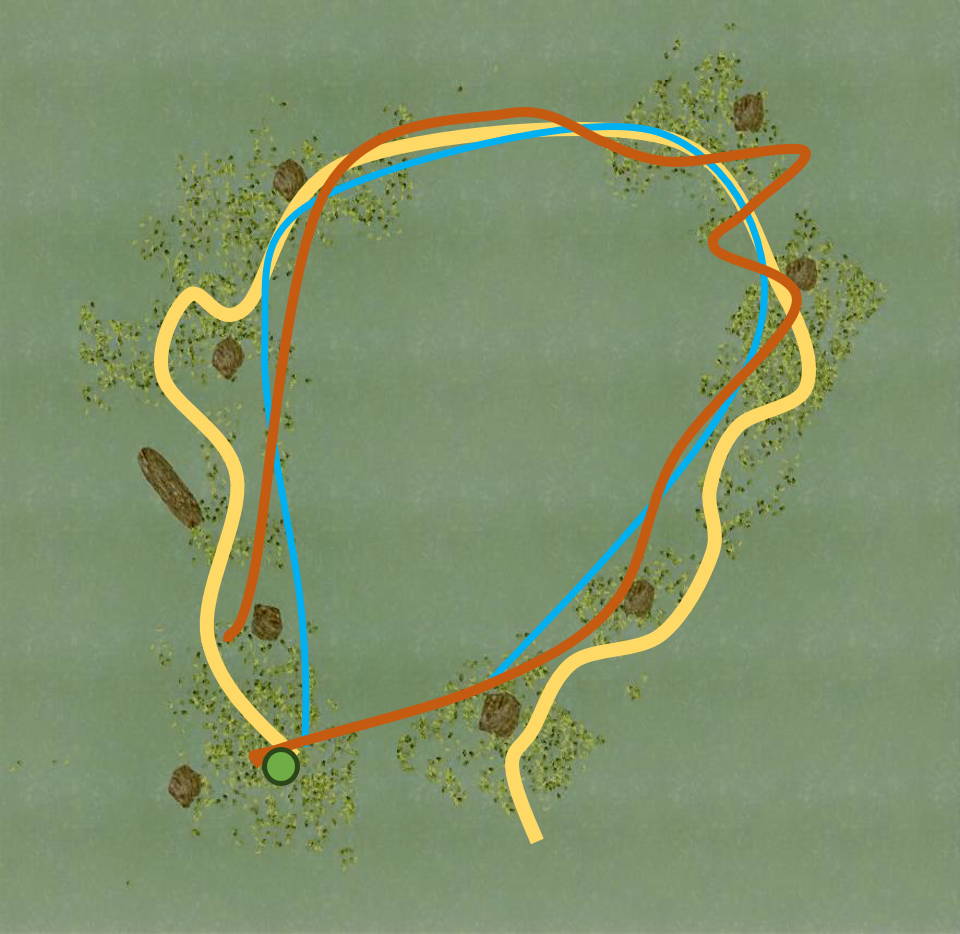
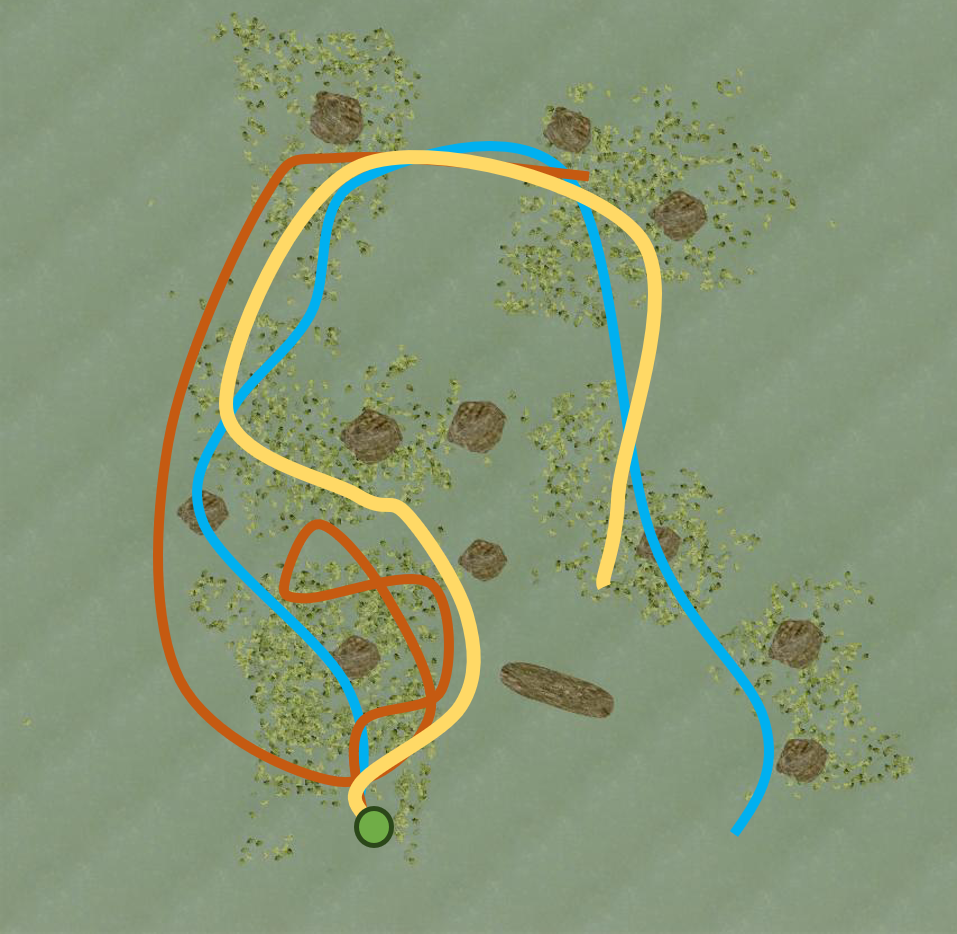
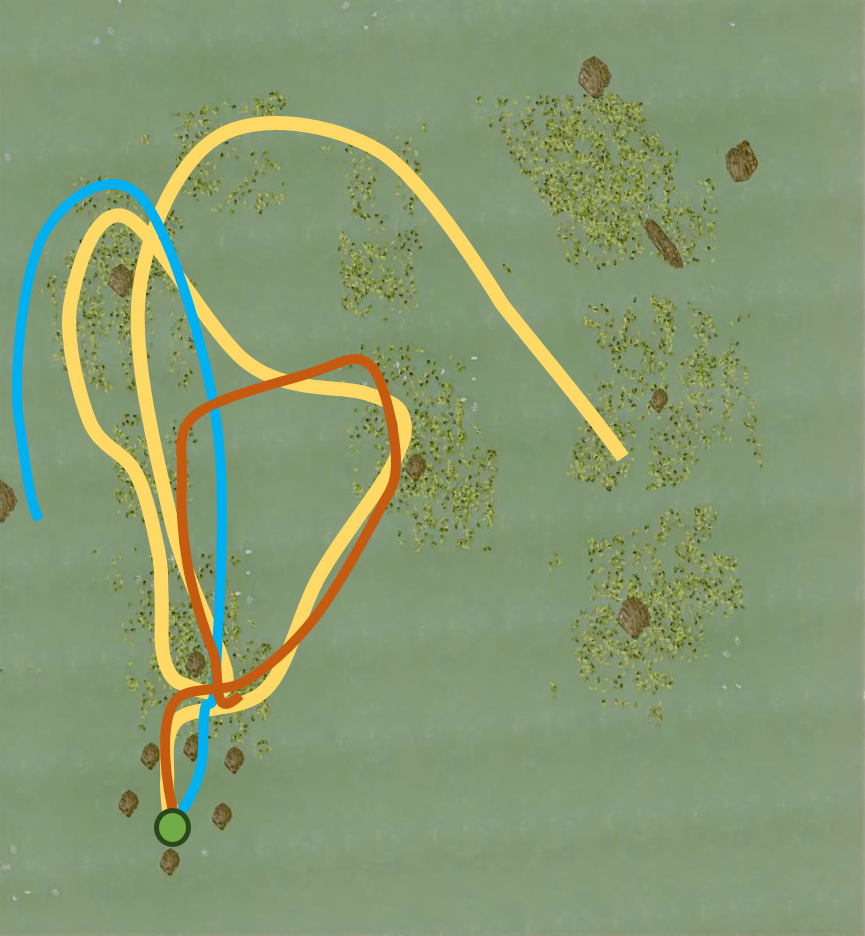
Coverage trajectories across all five environments, comparing DREAM, CORAL w/o Low-Level, and CORAL (Full).
Real-World Deployment
CORAL deployed on a BlueROV2 Heavy in a controlled pool (12 ft diameter, 5 ft depth) with oyster shells and floating obstacle balls. Perception runs on-board in real time; VLM queries reach cloud API endpoints asynchronously.
Overhead view
- Overhead View 1 — https://www.youtube.com/watch?v=uur1PPlvJeU
- Overhead View 2 — https://www.youtube.com/watch?v=xAjMP0Ewz1Y
First-person view
- First Person View 1 — https://www.youtube.com/watch?v=BRS6OG6R9Lg
- First Person View 2 — https://www.youtube.com/watch?v=s47BGoXR_HU
Results
We evaluate CORAL against two baselines across 10 simulation environments of varying topology complexity. All metrics are averaged over all environments.
| Method | Coverage (%) ↑ | Time (s) ↓ | Collisions ↓ | VLM Calls ↓ |
|---|---|---|---|---|
| DREAM | 80.00 | 1513.2 | 9 | 1261 |
| CORAL w/o Low-Level | 91.40 | 687.0 | 24 | 770 |
| CORAL (Ours) | 94.28 | 642.0 | 0 | 547 |
Headline gains over the previous state-of-the-art (DREAM):
- +14.28 pp coverage rate (80.00% → 94.28%)
- −100% collisions (9 → 0)
- −57% VLM calls (1261 → 547 per mission)
BibTeX
@misc{wu2026coralcontextualreasoninglocal,
  title         = {CORAL: COntextual Reasoning And Local Planning in A Hierarchical VLM Framework for Underwater Monitoring},
  author        = {Zhenqi Wu and Yuanjie Lu and Xuesu Xiao and Xiaomin Lin},
  year          = {2026},
  eprint        = {2603.14786},
  archivePrefix = {arXiv},
  primaryClass  = {cs.RO},
  url           = {https://arxiv.org/abs/2603.14786}
}